Moss Mythopoetics vs Biophilic Design: Two Approaches to Moss Art
Moss art has become increasingly popular in interior design and contemporary craft. Most moss artworks are rooted in biophilic design, an approach that celebrates the calming presence of nature indoors.
However, moss can also function as something more than a representation of nature. In a narrative-driven approach called Moss Mythopoetics, moss becomes a storytelling medium used to explore universal themes such as faith, heritage, transformation, and the human experience.
Understanding the difference between these two artistic approaches helps explain how moss art can function both as natural décor and as symbolic narrative sculpture.
What Is Biophilic Design in Moss Art?
Biophilic design centers on the human connection to nature. In moss art, this typically means compositions that highlight the beauty of natural materials and organic forms. Moss becomes the subject of the artwork, often arranged to evoke landscapes, plant forms, or natural textures.
These works bring the calming presence of nature indoors and are frequently used in interior design to create a sense of balance, tranquility, and connection to the natural world.
Biophilic moss art typically takes the form of:
• Botanical Abstracts — works that capture the rolling greens and organic elements of nature without depicting specific imagery.
• Nature Studies — compositions inspired by real landscapes or natural environments, where the artist’s intention is to evoke elements of nature such as trees, sky, rivers, or terrain.
Examples of Biophilic Works
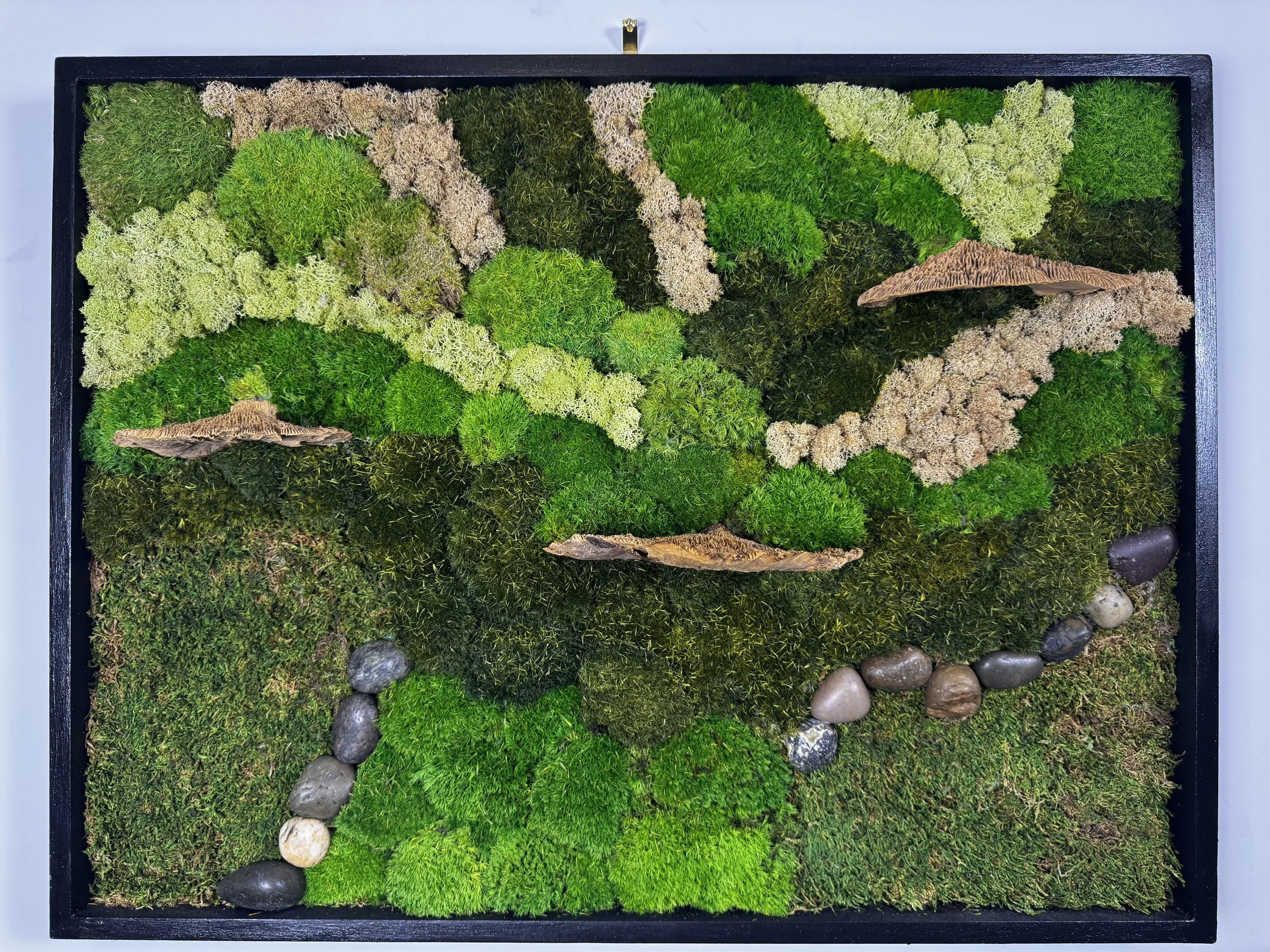
Biophilic moss art botanical abstract titled Reign by Sekelle Nathan
Rendered in Botanical Abstract style, Reign evokes the renewal energy of a fresh downpour on the forest. The hues of white and green rain down from above like joy and empowerment reigning over us.
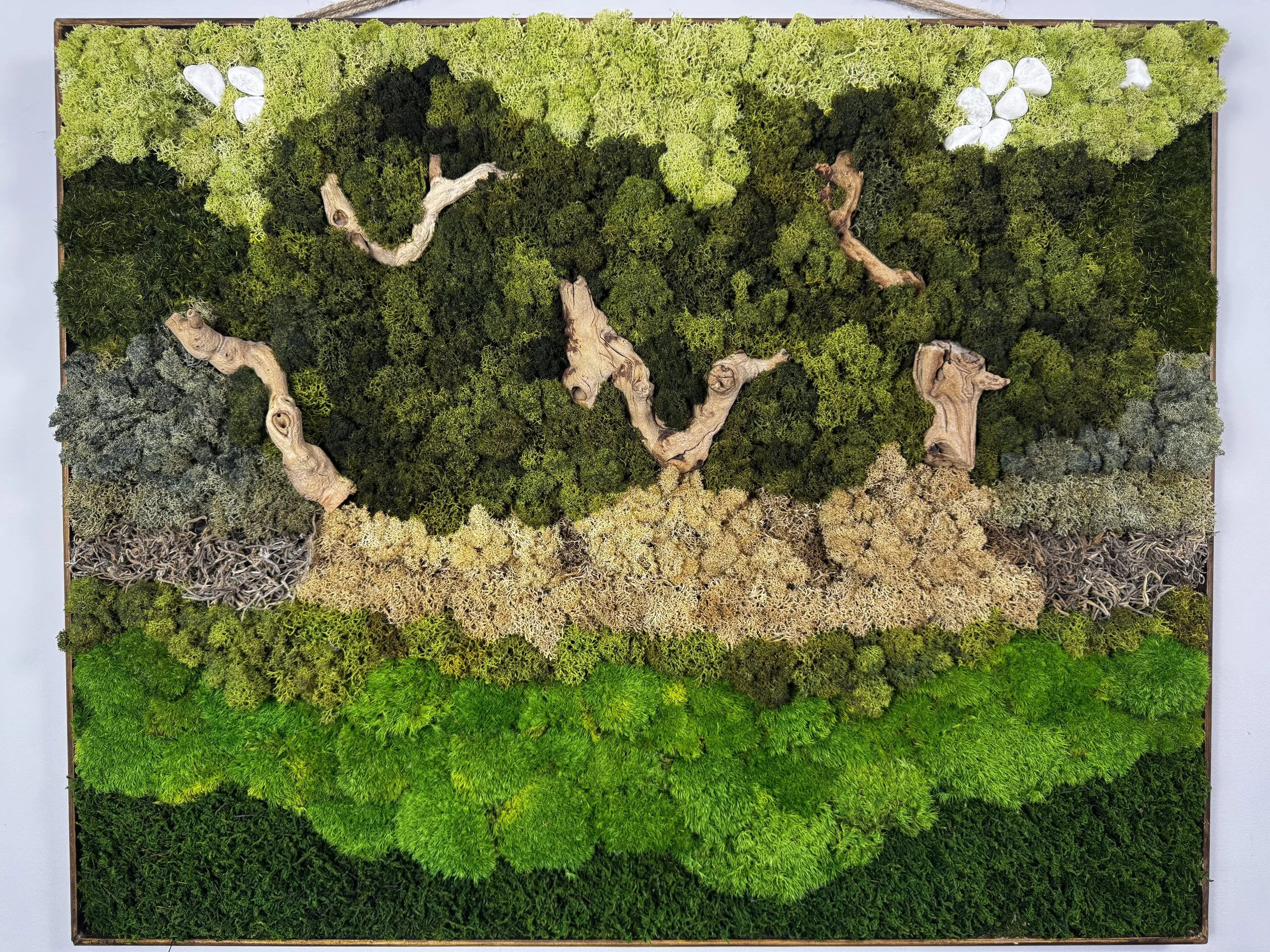
Nature study moss artwork Secret Beach by Sekelle Nathan
A Nature Study of a secluded beach on one of a group of small islands located off the northwest peninsula of Trinidad in the Bocas del Dragón (Dragons' Mouth) channel.
In these pieces, moss represents nature itself. The focus is on texture, form, and the visual rhythm found in the natural world.
What Is Moss Mythopoetics?
Moss Mythopoetics is a narrative-driven art style in which moss is used as a storytelling medium rather than the subject of the artwork.
The concept of Moss Mythopoetics was developed by artist Sekelle Nathan to describe moss artworks that communicate symbolic meaning instead of depicting nature.
Instead of representing landscapes or plant life, moss functions similarly to paint, clay, or fiber—one of many materials used to construct visual narratives.
In Moss Mythopoetics, the composition is guided by narrative ideas such as:
• faith
• spiritual transformation
• heritage and memory
• the human relationship with creation
Works created in this style are often considered moss sculptures, whether wall-mounted or free-standing, because they are built as narrative forms rather than decorative landscapes.
Examples of Moss Mythopoetic Works
The following works illustrate how moss can function as a narrative material rather than a representation of nature.
1st
A tribute to black excellence, 1st celebrates all the first time acheivements of former VP Kamala Harris: our first Black VP, first femaie VP, first VP from an HBCU (VP Harris and the artist are both alumna of Howard University), first VP of Caribbean descent (the artist is also from the Caribbean). On the campaign trail, VP Harris was known for her “Chucks and pearls”. And so to honor her accomplishments, here are her Chuck Taylors.
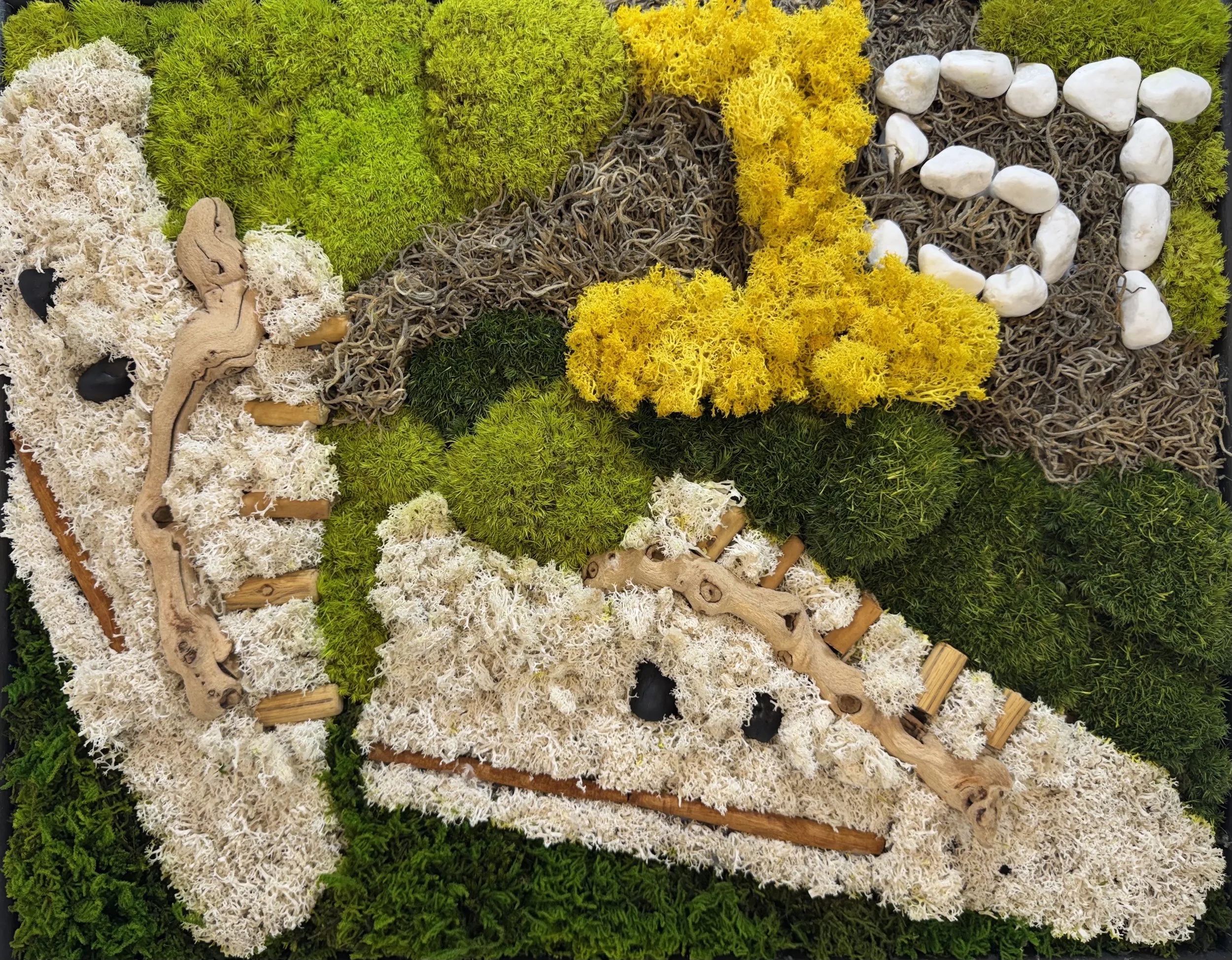
Moss Mythopoetics sculpture titled 1st by Sekelle Nathan
Praise!
In this Moss Mythopoetic panel, the light green pillow moss along the lower third represents Humanity, the dark green moss represents Humanity’s arms lifted in praise. And like a sweet savor, full of life and color, our praise rises up to Heaven, represented by a crown of white, where abides the 12 stones, one for each tribe of Israel, over which rule the 3 major stones of the Holy Trinity. Praise! captures the joy, the energy and the rejuvenation of lifting your hands in worship.
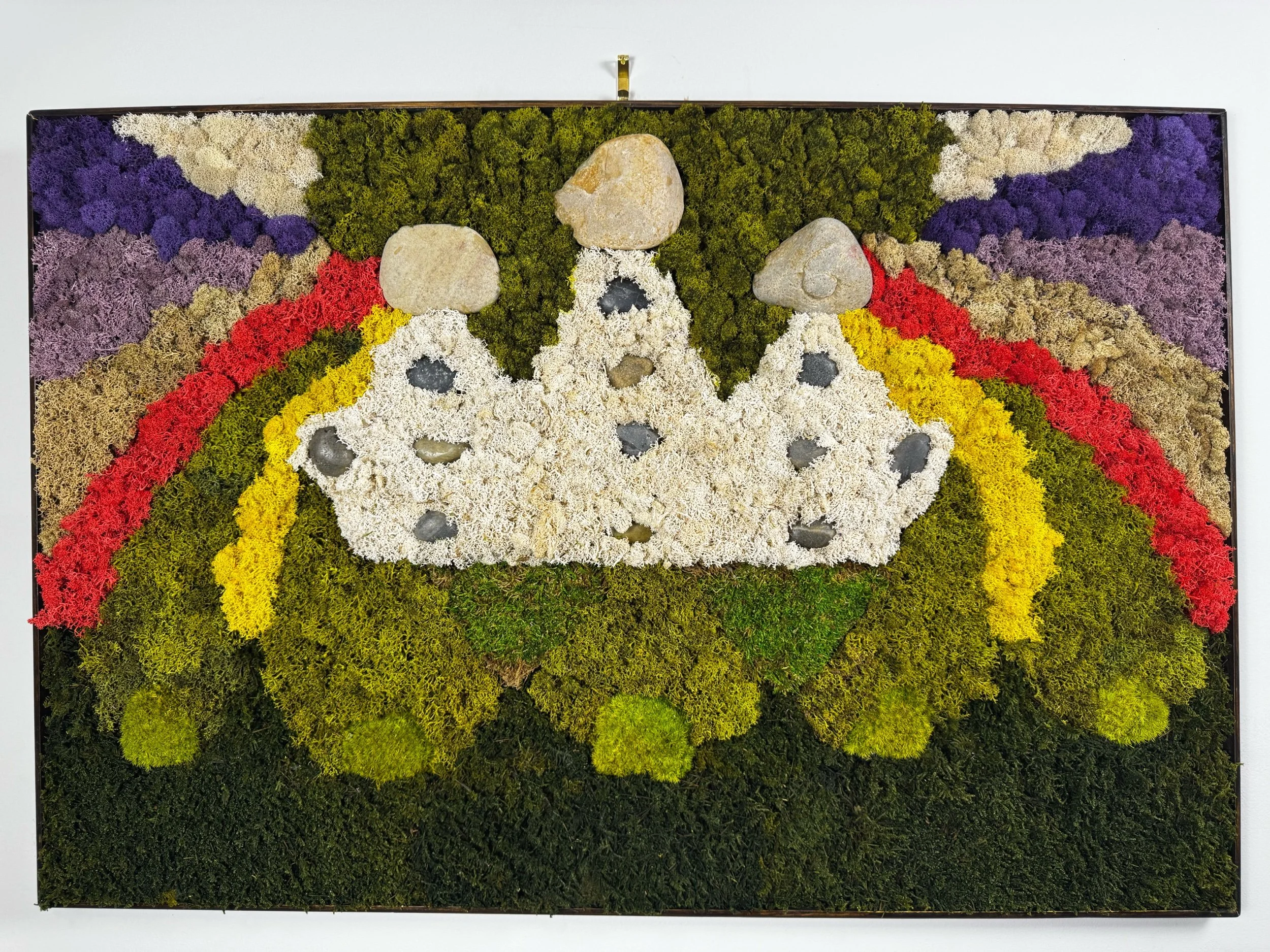
Moss Mythopoetics narrative moss sculpture Praise by Sekelle Nathan
Coconut Tree by the Bay
A moss sculpture of Maracas Bay, Trinidad, with white moss representing the crashing waves, sand-colored moss for the beautiful beaches, and a bountiful coconut tree, with exactly 13 stones on its trunk, one for each member of the artist’s family.
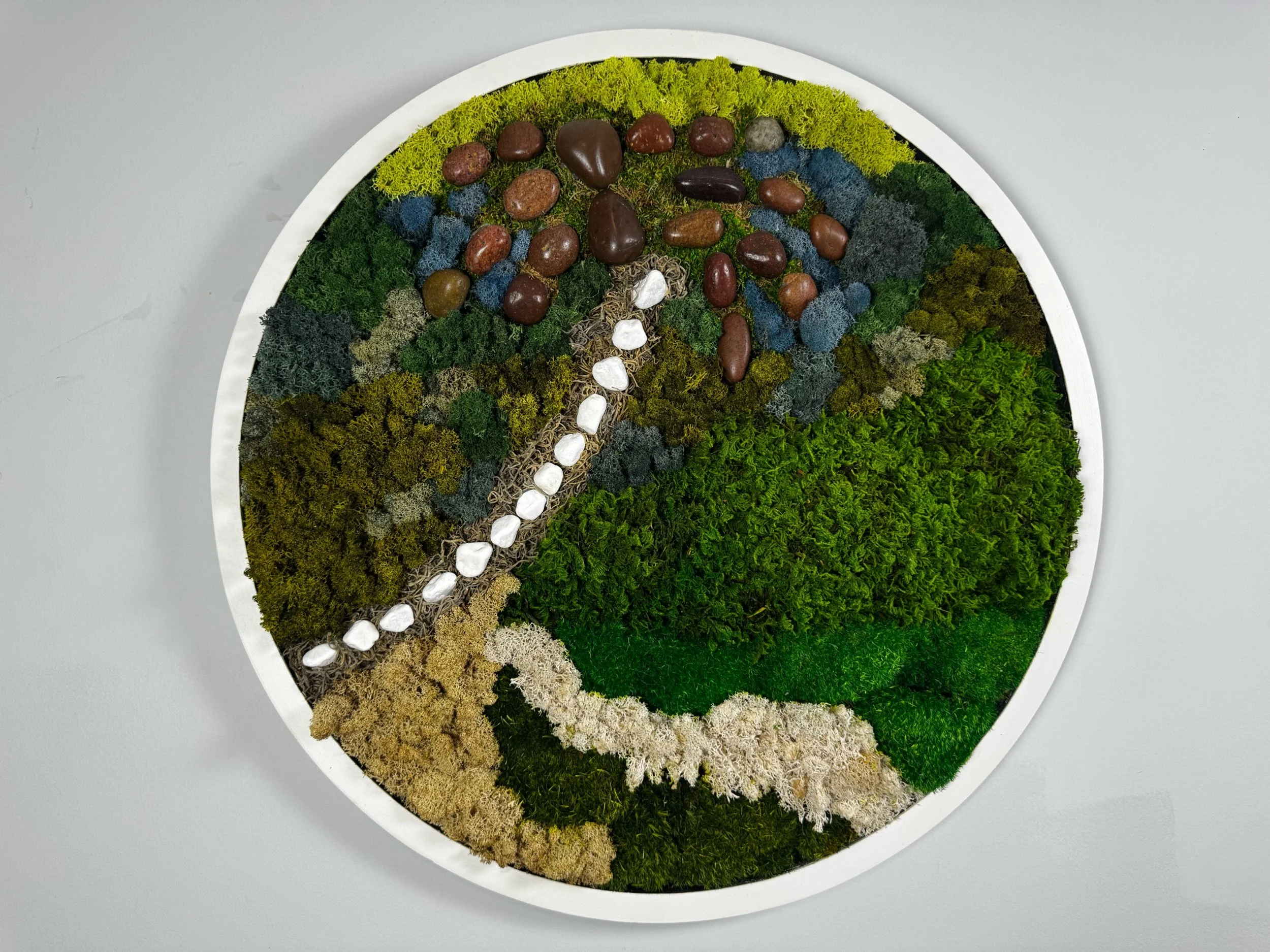
Moss Mythopoetics sculpture Coconut Tree by the Bay by Sekelle Nathan
In these works, moss participates in a symbolic narrative about human experience, belief, and memory.
Moss as Subject vs Moss as Medium
The difference between these two artistic approaches can be summarized simply:
Biophilic Design
Moss is the subject.
The artwork celebrates nature.
Moss Mythopoetics
Moss is the medium.
The artwork tells a story.
Both approaches use the same material, but they are guided by very different artistic intentions.
Why This Distinction Matters
Moss art is often categorized purely as natural décor, but its potential as a narrative medium is much broader. Moss Mythopoetics expands the role of moss beyond decorative greenery and into the realm of symbolic sculpture and storytelling.
By treating moss like any other artistic material—similar to paint or clay—artists can create works that explore themes far beyond the natural landscape.
The Future of Moss Mythopoetics
As an emerging artistic approach, Moss Mythopoetics invites viewers to reconsider what moss art can be. Instead of simply bringing nature indoors, it opens the door for moss to participate in visual narratives about faith, culture, and human experience.
In this way, moss becomes more than a natural material—it becomes a language for storytelling.
Artist: Sekelle Nathan
Studio: Decor Appeal
Location: Columbia, South Carolina
Explore more moss art at decorappealcola.com